
A lipid profile is a blood test that measures total cholesterol, LDL, HDL and triglycerides. Together these numbers give your doctor a picture of your heart risk. No single value tells the whole story, so the report should always be read alongside your age, blood pressure, sugar levels and family history.
“Sir, my cholesterol is 210. Is that dangerous?”
We hear some version of this at our Sector 16 counter almost every morning. Usually it is a man in his forties, report folded in his hand, a little shaken because a colleague of the same age had a stent put in last month. He has circled one number in pen. Just one.
That is the problem. A lipid profile has five or six values on it, and the one people panic about is often the least useful on its own.
What does a lipid profile test actually measure?
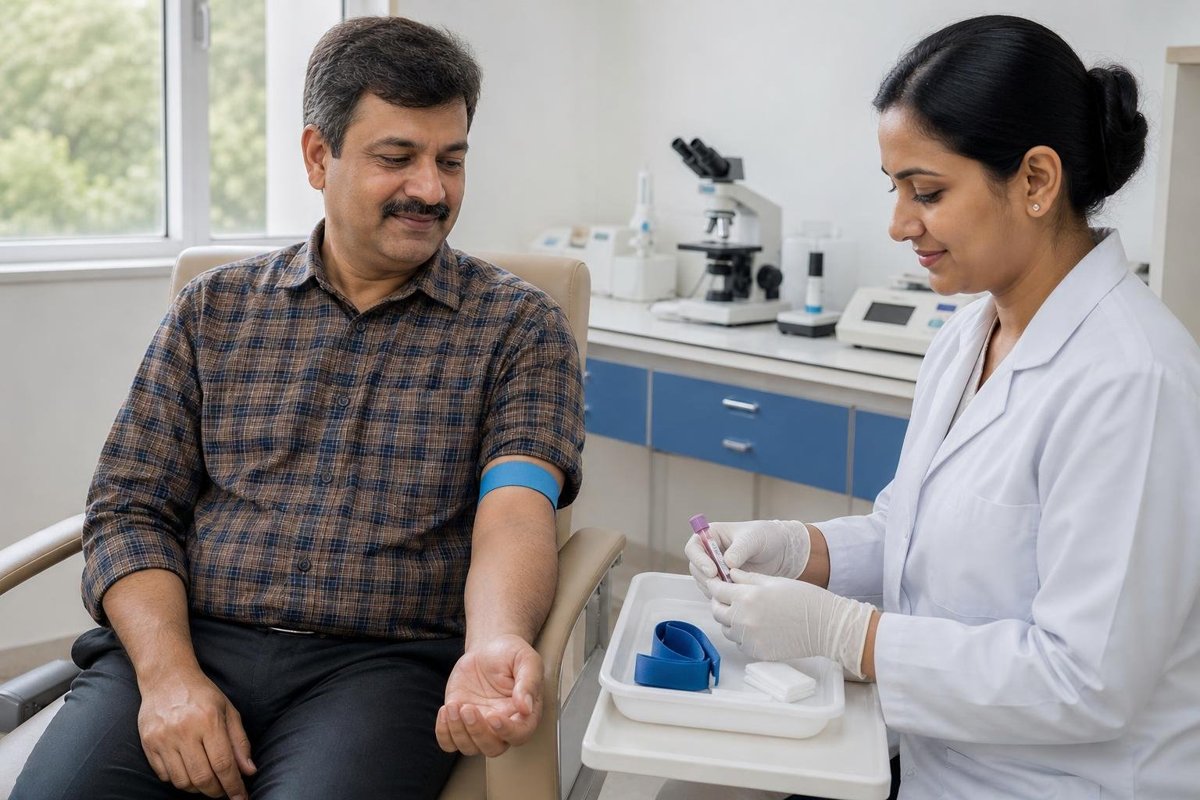
It is a simple blood test. One small sample from the arm, nothing more. The lab then reports the different fats travelling in your blood.
- Total cholesterol: the sum of all cholesterol in your blood. Handy as a first glance, weak as a verdict.
- LDL cholesterol: often called “bad” cholesterol, because excess LDL can deposit in artery walls over the years.
- HDL cholesterol: the “good” one. It helps carry cholesterol away from the arteries back to the liver.
- Triglycerides: the fat your body makes from extra calories, sugar and alcohol. This is the value that shoots up after wedding season.
- VLDL and ratios: many reports also show VLDL and a total cholesterol to HDL ratio, which some doctors use to judge risk.
If you are not sure whether your package includes all of these, you can look it up on our list of tests before booking.
What are normal cholesterol levels?
For most healthy adults, labs commonly print these reference ranges in mg/dL:
- Total cholesterol: below 200 is considered desirable
- LDL: below 100 is considered optimal
- HDL: above 40 for men and above 50 for women
- Triglycerides: below 150
Now the honest part. These are general ranges, not personal targets. Someone with diabetes, a previous heart attack or a strong family history is usually asked to keep LDL much lower than a healthy 25-year-old. Indian cardiologists tend to be stricter here, because heart disease shows up earlier in our population than in many others.
So a “normal” printed range does not always mean normal for you. Your doctor sets your target.
Which number matters most, LDL or total cholesterol?
In our experience, patients worry about total cholesterol and doctors look at LDL first.
Here is why. Total cholesterol includes HDL, the protective kind. A woman with a total of 215 and an HDL of 70 may be in a far better position than a man with a total of 190, an HDL of 32 and triglycerides at 280. On paper he looks “normal”. He is not.
Low HDL with high triglycerides is a pattern we see a lot in Chandigarh and across Punjab. Parathas with white butter, sweet chai four times a day, long hours at a desk and very little walking once the fog sets in. The report simply reflects the plate and the routine.
Do you need to fast before a lipid profile?
Traditionally, yes. A fast of around 9 to 12 hours, with plain water allowed, has been the usual instruction because triglycerides rise after a meal.
Many doctors now accept a non-fasting sample for routine screening. But if your triglycerides were high earlier, or the lipid profile is being done along with fasting sugar, a fasting sample is still preferred. Our advice is simple: follow what your doctor wrote on the prescription, and if nothing is written, come fasting in the morning.
A few practical things we tell people:
- Eat your normal dinner the night before. Not a heavy party meal.
- Avoid alcohol for at least a day or two before the test, as it can push triglycerides up.
- Take your regular medicines unless your doctor has said otherwise.
- Tell the lab if you have had fever or an illness recently. Values can shift for a while.
Early morning slots are easiest for fasting tests. If getting to Sector 16 before office is a struggle, our Home blood sample collection Chandigarh team can take the sample at your doorstep.
Who should get a lipid profile, and how often?
Most adults should have a baseline test at some point in their twenties or thirties, and earlier if heart disease runs in the family. After that, how often you repeat it depends on the result and your risk.
Your doctor may ask for it more regularly if you:
- have diabetes, high blood pressure or thyroid problems
- smoke, or carry extra weight around the waist
- have a parent or sibling who had heart disease at a young age
- are already on cholesterol medicine and need monitoring
Many people get it done once a year as part of a full body checkup in chandigarh, which is a sensible habit after 40.
What should you do if your report is abnormal?
First, do not start or stop any medicine on your own. Second, do not ignore it either.
One high reading is a starting point for a conversation with your physician. They will look at the whole picture and decide whether diet and exercise are enough or whether medication is needed. Sometimes a repeat test after a few weeks is advised, especially if you were unwell or had eaten heavily before the first one.
Small changes do show up in the numbers. A brisk 30 to 40 minute walk around Sukhna Lake or your sector park most days, less fried food, less sugar, more dal, sabzi and fruit. Boring advice. It works for a lot of people, though results vary and nobody can promise a number.
Frequently Asked Questions
Can I drink water before a lipid profile test?
Yes. Plain water is fine and actually makes the blood draw easier. Skip tea, coffee, milk and juice until the sample is taken.
Can thin people have high cholesterol?
They can. Cholesterol is influenced by genes, diet, thyroid function and other factors, not weight alone. We regularly see slim, active people surprised by a high LDL.
Is high HDL always good?
Higher HDL is generally linked with lower heart risk, but it does not cancel out a high LDL or other risk factors. Your doctor will read it in context.
How long does the report take?
A lipid profile is a routine test, and routine reports at our lab are usually ready the same day. You can check the expected time when you book.
My triglycerides are high but cholesterol is fine. Should I worry?
High triglycerides on their own still deserve attention. They are often related to sugar, refined carbs, alcohol or uncontrolled diabetes. Show the report to your doctor instead of guessing.
If your last lipid profile was more than a year ago, or you have never had one, you can book a test with Jiyo Diagnostics or reach us through our contact page and we will help you pick a suitable slot.
NAP Details
Name: Jiyo Diagnostics & Wellness Centre
Address: SCO 6, Sector 16 D, Sector 16, Chandigarh, 160015
Phone: +91 70870 15736
Website: https://jiyolabs.com/
Email: info@jiyolabs.com
Related health articles

Reviewed & published by
team3Our editorial team works with qualified pathologists to ensure accurate health information for patients in Chandigarh.