

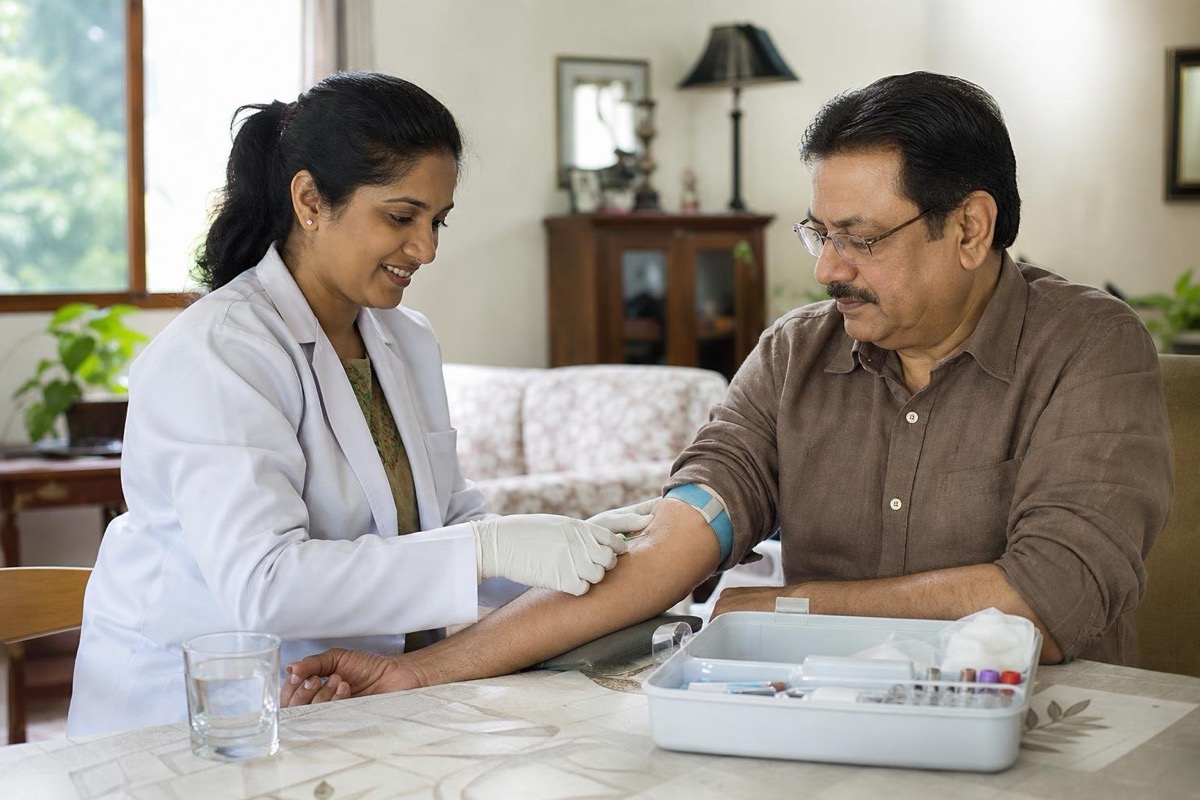
Fasting for a blood test usually means no food or drinks other than plain water for 8 to 12 hours before the sample. It’s needed for tests like fasting blood sugar and, often, a lipid profile. Many common tests, such as CBC, thyroid, hba1c, vitamin D, B12, kidney and liver function, don’t need fasting. Keep drinking water, and ask before skipping any regular medicine.
“Can I have my morning chai before the test?” It’s the question our home-collection team in Chandigarh hears most, usually at 7 am, from someone who’s already halfway through the cup.
Getting fasting right matters, because a few sips of sweet tea can change a sugar or triglyceride result enough to cause confusion. Here’s a simple guide.
Which Blood Tests Need Fasting?
- Fasting blood sugar (FBS): 8 to 12 hours
- Glucose tolerance test (GTT): fasting, followed by a glucose drink
- Lipid profile: traditionally 9 to 12 hours fasting; some doctors now accept non-fasting samples, so follow your prescription.
- Insulin and some hormone tests: often fasting, as advised
- Full body checkup packages: usually fasting, because they include sugar and lipids. See our full body checkup Mohali
Which Tests Don’t Need Fasting?
- CBC (complete blood count)
- HbA1c (average sugar over three months)
- Thyroid profile (T3, T4, TSH)
- Vitamin D and vitamin B12
- Kidney function (creatinine, urea) and liver function, in most cases
- Urine routine
If you’re having a mix of tests, the strictest rule applies: fast if any one test needs it.
What Counts as Fasting?
Allowed: plain water, as much as you like. Staying hydrated actually makes the blood draw easier.
Not allowed:
- Tea or coffee, even without sugar or milk
- Juice, milk, lassi, coconut water
- Chewing gum, mints, paan
- Smoking
- Alcohol the evening before
- Heavy exercise just before the test
How Long Is Too Long?
More isn’t better. Fasting much beyond 12 to 14 hours can itself affect some results and make you feel faint. The simplest approach: eat a normal, light dinner by about 9 pm and give your sample between 7 and 10 am.
What About Medicines?
- Most regular medicines, such as blood pressure tablets, can be taken with water as usual.
- Diabetes medicines and insulin: ask your doctor. Taking them while fasting can cause low sugar. Many people are advised to take them after the sample, with breakfast.
- Thyroid tablets: for a thyroid test, many doctors prefer the sample before the morning dose. Follow your doctor’s advice.
- Supplements like biotin can interfere with some tests; mention them.
Tips for Diabetics
Book the earliest slot, carry a snack to eat right after the sample, and stop the test if you feel shaky or sweaty. Our Home blood sample collection Chandigarh service can come to you early in the morning so you can eat straight after.
Frequently Asked Questions
Can I drink water before a fasting blood test?
Yes. Plain water is allowed and encouraged.
Is black coffee allowed before a fasting test?
No. Even black coffee can affect some results.
How many hours of fasting for a lipid profile?
Usually 9 to 12 hours, unless your doctor has ordered a non-fasting test.
Do I need to fast for a thyroid test?
No, but timing relative to your thyroid tablet may matter. Ask your doctor.
What if I accidentally ate before the test?
Tell the lab. For fasting tests, it’s usually better to reschedule than get a misleading result.
Book your test online or arrange home collection with Jiyo Diagnostics, Sector 16-D, Chandigarh. Open Mon–Sat 7 am to 8 pm, Sunday 8 am to 2 pm.
NAP Details
Name: Jiyo Diagnostics & Wellness Centre
Address: SCO 6, Sector 16 D, Sector 16, Chandigarh, 160015
Phone: +91 70870 15736
Website: https://jiyolabs.com/
Email: info@jiyolabs.com
Related health articles

Reviewed & published by
team3Our editorial team works with qualified pathologists to ensure accurate health information for patients in Chandigarh.